Our picks for the best running shoes for plantar fasciitis, from max cushion to stability to budget, tested in Florida heat. Includes where to get fitted.
Medical disclaimer: This article is for educational purposes only and is not medical advice, diagnosis, or treatment. Running shoes cannot treat an injury on their own. Heel and foot pain can have causes other than plantar fasciitis, so see a licensed physician or podiatrist for a diagnosis and before changing your training or footwear because of pain.
Plantar fasciitis is the most common foot injury among runners, and Florida's hard concrete sidewalks and flat terrain can make it worse. The right shoes won't cure PF, but they can dramatically reduce pain and help you keep running through recovery.
We consulted with Florida running store experts and podiatrists to compile this guide. Every shoe listed below is available at specialty running stores across Florida where you can get a professional fitting.
What are the best running shoes for plantar fasciitis?
The best running shoes for plantar fasciitis combine firm arch support, a cushioned heel, and a slightly rockered sole. Top picks include the Brooks Adrenaline GTS 24 for overall support, Hoka Bondi 9 for maximum cushioning, ASICS Gel-Kayano 32 for stability, and Brooks Ghost 17 for a neutral ride.
| Shoe | Best for | Who it suits |
|---|---|---|
| Brooks Adrenaline GTS 24 | Best overall | Mild-to-moderate overpronators |
| Hoka Bondi 9 | Max cushion | Runners who want maximum shock absorption |
| ASICS Gel-Kayano 32 | Stability | Moderate-to-severe overpronators |
| Brooks Ghost 17 | Neutral ride | Neutral runners with mild PF |
| ASICS GT-1000 14 | Budget | Casual runners and walkers who want stability for less |
How do you choose running shoes for plantar fasciitis?
Choose running shoes for plantar fasciitis with a structured arch, a well-cushioned heel, and a rockered sole that reduces toe-flex stress. The American Academy of Orthopaedic Surgeons recommends thick soles with extra cushioning, which lower tension on the plantar fascia with each step. Match stability to your foot motion and get fitted in person.
The key features to compare:
- Arch support — A structured midsole that supports your arch reduces strain on the plantar fascia
- Cushioned heel — Extra cushioning at the heel absorbs impact where PF pain is worst
- Stability features — Mild to moderate stability helps control overpronation, a leading cause of PF
- Firm midsole — Shoes that are too soft can actually worsen PF by allowing excessive arch collapse
- Low-to-moderate drop — An 8–12mm heel-to-toe drop keeps the plantar fascia from overstretching

Best Overall: Brooks Adrenaline GTS 24
Check price on Amazon: men's → | women's →
Drop: 12mm | Best for: Mild-to-moderate overpronation with PF
The Adrenaline GTS is a long-running favorite for runners dealing with plantar fasciitis. Its GuideRails stability system prevents excessive foot motion without a hard medial post, and the DNA LOFT v3 cushioning absorbs impact at the heel. The 12mm drop keeps the plantar fascia in a slightly shortened position, reducing strain. Deciding between Brooks and On? See our Brooks vs On Cloud comparison.
Why it works for PF: The combination of gentle stability and plush heel cushioning addresses the two main mechanical causes of plantar fasciitis — overpronation and heel impact.

Best Max Cushion: Hoka Bondi 9
Drop: 5mm | Best for: Maximum shock absorption
The Bondi 9's thick midsole provides more cushioning than almost any other running shoe. Its rocker geometry reduces pressure on the plantar fascia during toe-off by guiding your foot through the stride. Many Florida runners with PF swear by the Bondi for long walks and easy runs during recovery.
Why it works for PF: The rocker geometry reduces the need for your foot to flex at the toe joints, which takes stress off the plantar fascia. The max cushion protects the heel strike zone.
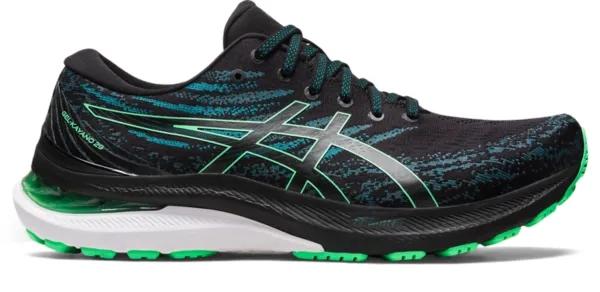
Best Stability: ASICS Gel-Kayano 32
Drop: 8mm | Best for: Moderate-to-severe overpronation with PF
If your plantar fasciitis is caused by significant overpronation, the Kayano 32's 4D Guidance System gives firmer support than the Adrenaline, responding when your foot starts to collapse under load. Combined with FF BLAST PLUS cushioning, it's a top choice for runners who need serious stability.
Why it works for PF: Stronger medial support prevents the arch from collapsing, which is a primary cause of plantar fascia strain in overpronators.
Best Neutral Option: Brooks Ghost 17
Drop: 12mm | Best for: Neutral runners with mild PF
The Ghost 17 doesn't have stability features, but its DNA LOFT v3 cushioning and 12mm drop make it comfortable for neutral runners with mild plantar fasciitis. The roomy toe box gives toes space to spread naturally, reducing forefoot pressure.
Why it works for PF: Excellent heel cushioning and a supportive 12mm drop. Add a custom orthotic for arch support if your PF is related to flat feet.

Best Budget: ASICS GT-1000 14
Drop: 8mm | Best for: Budget-friendly stability
The GT-1000 is ASICS' entry-level stability shoe. Its 3D Guidance System adds support through the shape of the midsole rather than a hard post, and FF BLAST cushioning keeps it comfortable. For casual runners and walkers dealing with PF, it provides real stability at a lower price than the premium options.
Running with Plantar Fasciitis in Florida
Florida's climate presents unique challenges for runners with PF:
- Hard surfaces everywhere — Florida's concrete sidewalks and asphalt roads offer zero give. Max-cushion shoes are especially important here.
- Flat terrain — While hills can aggravate PF, Florida's flat terrain means no downhill pounding. This is actually an advantage for PF recovery.
- Heat helps — Warm muscles and fascia are more pliable. Florida's warm climate can actually aid recovery if you run during the warmer parts of the day (but stay hydrated).
- Morning stiffness — PF is worst in the morning. Consider running in the afternoon or evening when the fascia has loosened up, which also avoids peak Florida heat.
Get Fitted at a Florida Running Store
The best way to find your ideal PF shoe is to visit a specialty running store for a gait analysis. Florida has over 90 specialty running stores with staff trained to assess your gait and recommend shoes for plantar fasciitis. Many stores allow returns or exchanges within 30–60 days if the shoe doesn't help.
Find a running store near you →
New to fittings? Our step-by-step guide to getting fitted for running shoes covers what to expect. If you also have wide feet or high arches, see our wide feet and high arches shoe guide.
When to See a Doctor
If your plantar fasciitis doesn't improve after 2–3 weeks with proper shoes and stretching, see a sports medicine doctor or podiatrist. Florida has excellent sports medicine practices in every major city. Signs you should seek medical help include pain that worsens over time, swelling, numbness, or inability to bear weight on the heel.
Sources: American Academy of Orthopaedic Surgeons (OrthoInfo): Plantar Fasciitis and Bone Spurs, which notes that more than 90% of patients improve within 10 months with nonsurgical treatment. See also the Mayo Clinic overview of plantar fasciitis. This guide is general information, not medical advice. A doctor or podiatrist should diagnose heel pain and advise on treatment.
Written by Darrin DeTorres, running coach. Last updated October 5, 2026.
Frequently Asked Questions
What is the best running shoe for plantar fasciitis? expand_more
The Brooks Adrenaline GTS 24 is our top pick for plantar fasciitis. Its GuideRails stability and DNA LOFT v3 cushioning address the main causes of PF — overpronation and heel impact. The Hoka Bondi 9 is also excellent if you prefer maximum cushioning.
Are Hoka shoes good for plantar fasciitis? expand_more
Yes, Hoka shoes are popular for plantar fasciitis. The Bondi 9 (neutral) and Gaviota (stability) are the best Hoka options. Their thick midsoles and rocker geometry reduce stress on the plantar fascia. However, some PF sufferers need stability features that neutral Hokas don't provide.
Should I stop running with plantar fasciitis? expand_more
Not necessarily. Many runners can continue training with PF if they reduce mileage, wear supportive shoes, stretch regularly, and ice after runs. However, if pain increases during or after running, take rest days. Consult a sports medicine doctor if pain persists beyond 2-3 weeks.
Are On Cloud shoes good for plantar fasciitis? expand_more
On Cloud shoes are generally not recommended for plantar fasciitis. Their minimal cushioning and neutral design don't provide the arch support or heel cushioning that PF sufferers need. Shoes with structured stability and thick midsoles, like the Brooks Adrenaline or Hoka Bondi, are better choices.
Can running shoes cure plantar fasciitis? expand_more
Running shoes alone won't cure plantar fasciitis, but they're a critical part of treatment. The right shoes reduce strain on the plantar fascia and allow healing. Combine supportive shoes with stretching, icing, and gradual return to mileage for the best recovery.
Should I wear stability or neutral shoes for plantar fasciitis? expand_more
It depends on how your foot moves. Runners who overpronate often do best in a stability shoe like the Brooks Adrenaline GTS 24 or ASICS Gel-Kayano 32. Neutral runners with mild plantar fasciitis can use the Brooks Ghost 17, adding an orthotic if flat feet are a factor. A gait analysis at a specialty running store settles it.
How often should I replace running shoes with plantar fasciitis? expand_more
Replace them before the cushioning and support break down. The American Academy of Orthopaedic Surgeons advises replacing athletic shoes before they wear out and no longer support your feet. If heel pain returns in a shoe that used to feel fine, check the midsole for compression and have a running-store fitter look at it.