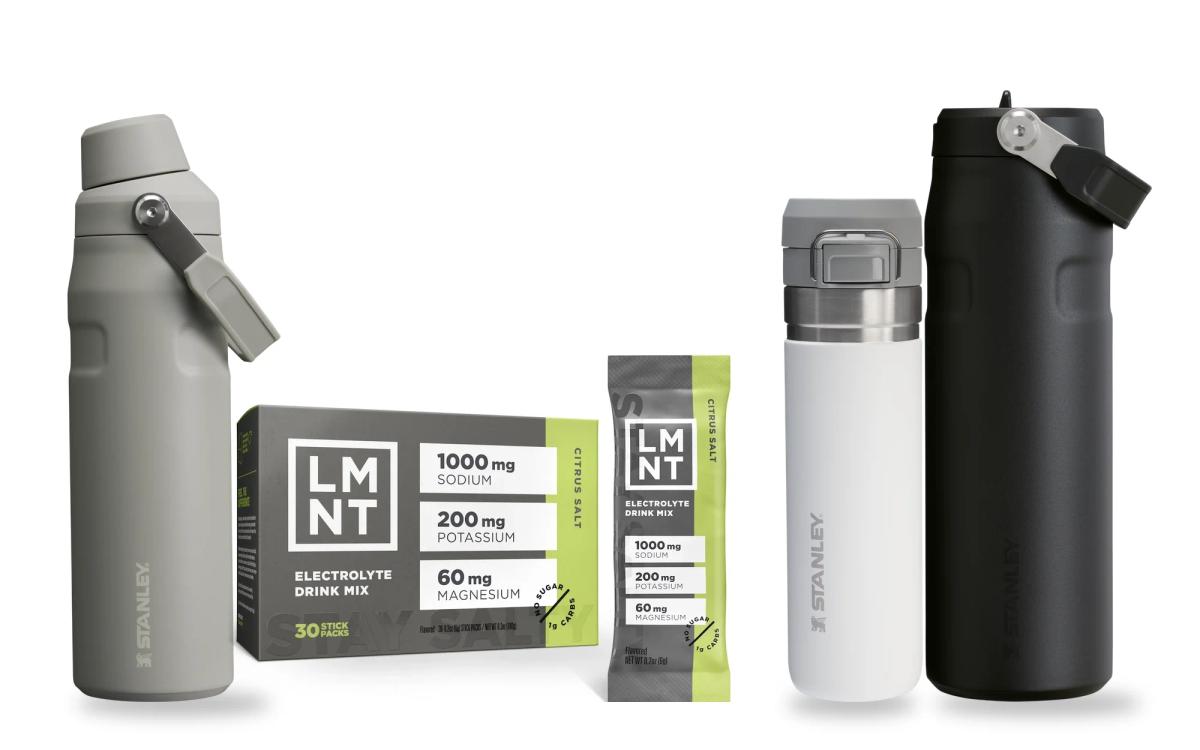
How much water distance runners need, how to find your sweat rate, when to add electrolytes, why LMNT is our go-to, and the easy-to-carry Stanley bottles we keep in the car.
Medical disclaimer: The training information in this article is for educational purposes only and does not constitute medical advice. Consult a licensed healthcare provider or sports medicine professional before beginning any new training program, particularly if you have a pre-existing health condition, injury history, or have been inactive for an extended period.
How much water do distance runners need?
There is no single number. Sweat rates run from under half a liter an hour to more than two liters an hour, so the right amount is the amount you lose. Weigh yourself before and after a run to find it. The goal is to finish no more than 2% lighter than you started, because performance drops once you pass that line.
In Florida that line comes fast. A June long run in Orlando or a Saturday cross country meet in Tallahassee can pull more water out of you in an hour than most people drink all morning. Water alone gets you part of the way. Salt gets you the rest. Here is how to get both right, the electrolyte mix we actually use, and the bottles that make it easy to have cold water waiting when you finish.
Why the Florida heat makes it harder
Sweat cools you when it evaporates. In dry heat it does that job well. In Florida humidity a lot of it just drips off, so your body keeps pumping out more and you lose water without getting much cooler for it.
Most runners also start behind. The National Athletic Trainers' Association says more than half of athletes, including high school athletes, show up to practice already low on fluids. Drinking only when you feel thirsty usually replaces about two thirds of what you sweat out. Over a summer of daily runs that gap adds up.
Florida takes this seriously at the school level. The Zachary Martin Act, signed in 2020 and named for a Riverdale High football player who died after a summer workout, requires high schools to measure heat stress with wet bulb globe temperature (WBGT) readings, adjust practices to match, and keep cold water immersion tubs ready. If your coach moves practice to 6 a.m. or cuts a workout short, that reading is usually why.
Find your sweat rate in one run
This is the single most useful thing you can do, and it takes one easy run.
- Weigh yourself right before you run, with as little on as possible.
- Run for an hour at your normal pace and note how much you drink.
- Towel off and weigh again right after.
- Each pound you lost is about 16 ounces of sweat. Add back whatever you drank. Lose 2 pounds while drinking 16 ounces, and you sweated about 48 ounces in that hour.
Do it once in summer and once in winter. The numbers will not be the same, and that is the point. If you see a white, crusty line on your hat or shirt after runs, you are a salty sweater, and the electrolyte section below matters even more for you.
Before, during and after
Before
Start the run topped off, not sloshing. Drink normally through the day before and have a glass or two of water a couple of hours ahead of time so you can use the bathroom before you head out. Pale yellow urine is the target. Dark yellow means you are starting behind.
During
- Under an hour: most runners are fine with water, or nothing at all on a cool morning.
- Over an hour, or any hard summer run: drink small amounts every 15 to 20 minutes and add electrolytes.
- Over about 75 to 90 minutes: you need carbs too. Electrolyte mixes like LMNT have no sugar, so pair them with a gel such as GU or Maurten.
Plan water stops on loop routes, stash a bottle in the car at the trailhead, or carry a handheld. Our running gear guide covers handhelds, belts and vests.
After
Weigh in again if you can. When you have less than four hours before your next session, sports medicine guidelines say to drink 100% to 150% of what you lost, because some of it passes straight through. That works out to roughly 16 to 24 ounces for every pound. Eat a real meal with some salt in it. If you have all evening, normal eating and drinking will catch you up.
Electrolytes: what they do and when you need them
Sweat is not just water. It carries sodium, plus smaller amounts of potassium and magnesium. Sodium is the big one. It helps your body hold on to the water you drink instead of flushing it out.
On a short run, or a normal day of eating, you probably do not need to add anything to your water. The NATA position statement is clear on that. Electrolytes earn their place when:
- the run goes past an hour, especially in summer
- you train twice in one day, or race a meet in the afternoon sun
- you are a heavy or salty sweater
- you are training for a half marathon or marathon and doing long runs in the heat
There is a safety reason too. Drinking big amounts of plain water while losing salt can drop your blood sodium too low, a condition called exercise-associated hyponatremia. It has been found in 10% to 20% of distance athletes tested after events. More water is not always the answer. The right water with some salt in it usually is.
Why LMNT is our go-to electrolyte mix
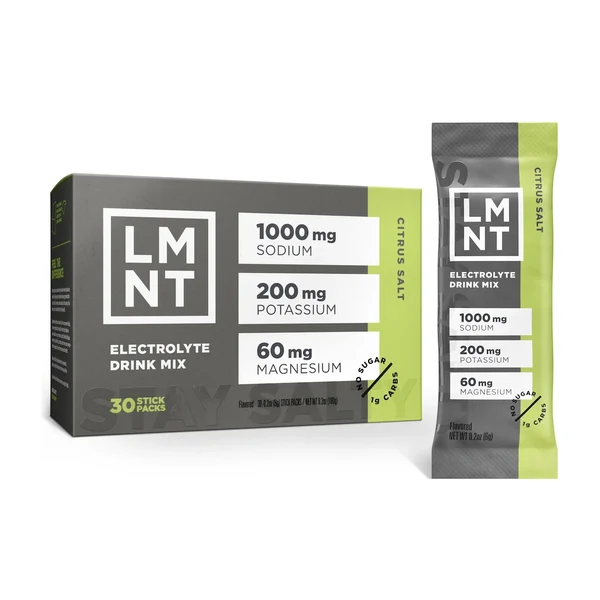
We have tried most of what is out there, and LMNT is the one that stays in our cabinet. Each stick has 1,000 mg of sodium, 200 mg of potassium and 60 mg of magnesium, with zero sugar. That is a lot more sodium than most sports drinks, which is exactly what a Florida summer pulls out of you.
A few ways we use it:
- Before a long run: one stick in 16 to 32 ounces of water about an hour ahead.
- Shorter or cooler runs: half a stick is plenty.
- After a hot workout: one stick in a big, ice-cold bottle while you stretch.
Two honest notes. It is salty, so mix it with more water rather than less the first time. And it is a big sodium dose, so it is a training and heat tool, not an every-glass drink. If you have high blood pressure or a medical condition, check with your doctor first.
Citrus Salt is the easiest place to start. Raspberry Salt and Watermelon Salt are our other favorites, and the variety pack lets you try them all. Every LMNT link here goes to LMNT's own store on Amazon.
Electrolytes
The salt your water is missing.
LMNT Citrus Salt packs 1,000 mg of sodium, 200 mg of potassium and 60 mg of magnesium into each stick with zero sugar. Mix one into 16 to 32 ounces of cold water before or after a hot long run. Sold by Drink LMNT.
Check price on AmazonAs an Amazon Associate we earn from qualifying purchases.
Easy-to-carry Stanley bottles for runners
An insulated bottle is not something you run with mile after mile. It is the bottle waiting in your car at the trailhead, in the team tent at a meet, or on the curb at the end of a loop course. In Florida, that is where it wins: you come back to water that is still cold instead of water that has been baking in a cup holder. These three are light, carry with one hand, and fit most cup holders. All three are sold and shipped by Amazon.
Water bottle
The one with the handle.
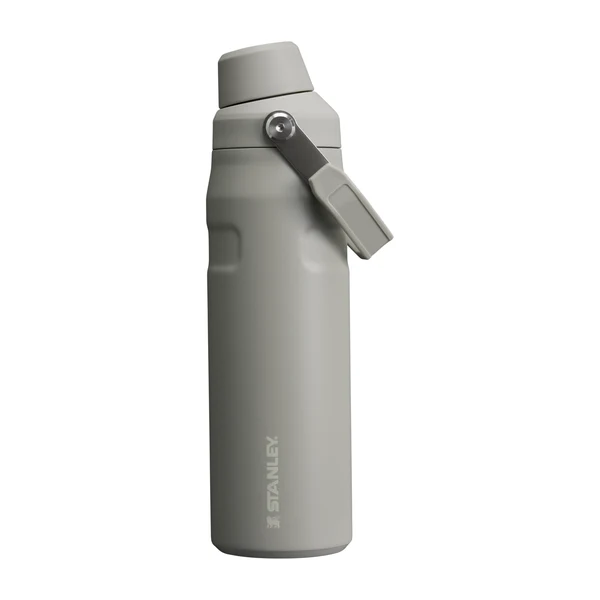
The Stanley IceFlow Flip Straw 2.0 holds 24 ounces and is built with Stanley's AeroLight steel, which the brand says is 33% lighter than its standard steel bottles. The flip-up straw means no unscrewing a cap with sweaty hands, and the carry handle hooks over a finger or a tent pole. There is also a 16 oz size for younger runners.
Check price on AmazonAs an Amazon Associate we earn from qualifying purchases.
Water bottle
Built for the big gulp after a hard rep.
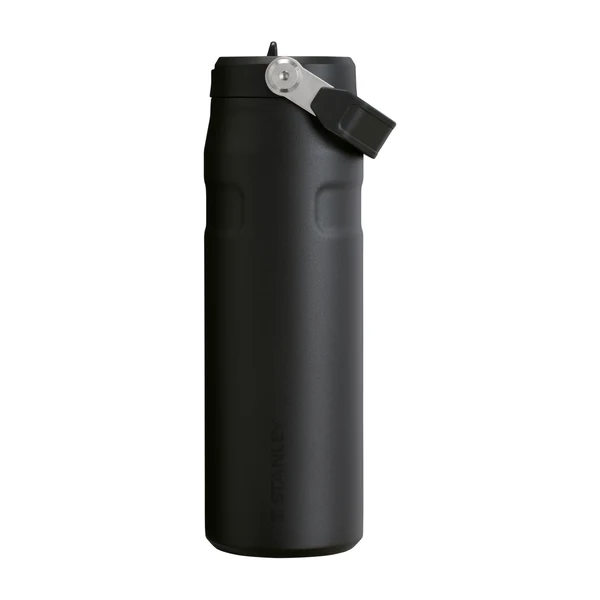
The IceFlow Fast Flow has an angled spout for drinking fast and a wide mouth that takes full-size ice cubes. Stanley rates it cold for 8 hours and iced for 40, long enough to sit in the car through a full long run and a cooldown. Same lightweight AeroLight build, 24 ounces.
Check price on AmazonAs an Amazon Associate we earn from qualifying purchases.
Water bottle
One thumb, one sip.
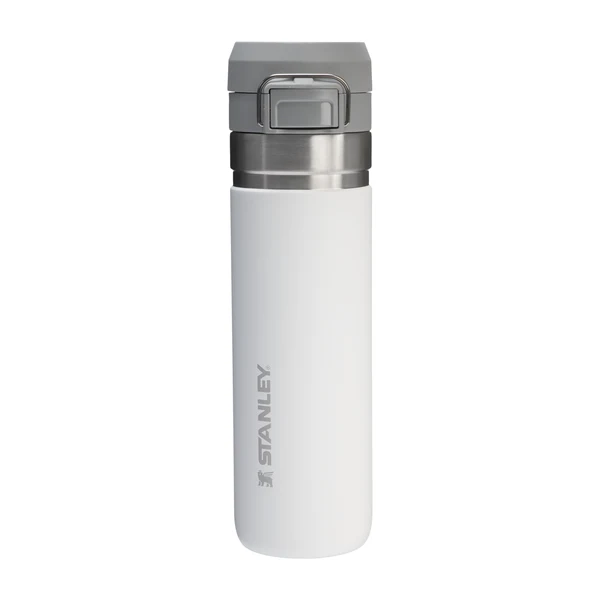
The Quick Flip GO opens with a push button, so you can drink one-handed while you walk off a workout. The lid locks for your bag, it holds 24 ounces, and Stanley rates it cold for up to 12 hours. A good pick to toss in a school backpack for practice.
Check price on AmazonAs an Amazon Associate we earn from qualifying purchases.
Want something to carry during the run itself? A handheld like the Nathan SpeedDraw Plus Insulated straps to your hand and holds 18 ounces. Fill your Stanley with ice water and LMNT, and refill the handheld from it at the car.
Warning signs to stop and get help
Know these before July does it for you:
- Heat exhaustion: heavy sweating, dizziness, nausea, headache, goosebumps or chills in the heat. Stop, get to shade, drink, and cool off with ice or cold water.
- Heat stroke: confusion, slurred speech, stumbling, collapse. This is a medical emergency. Call 911 and cool the runner right away, with cold water immersion if it is available.
- Hyponatremia: nausea, headache, confusion and puffy hands after drinking a lot of plain water. It can look like dehydration, so get medical help instead of forcing more water.
This article is general information, not medical advice. Talk with a doctor or your school's athletic trainer about your own hydration plan.
Put it to work on race day
Most Florida road races have water every mile or two, so you will not need to carry much on race day. What you do need is the habit: start topped off, take a little at every stop, and have cold water and electrolytes waiting at the finish. Fall is the best time to practice it. Find your next one on the Florida half marathon calendar, the Florida road race guide or the cross country meet schedule, and read our guide to running in the Florida heat for the best times of day to train.
Stay salty, and we will see you at the start line.
Sources: McDermott BP et al., National Athletic Trainers' Association Position Statement: Fluid Replacement for the Physically Active, Journal of Athletic Training, 2017 (sweat rates, 2% body mass, pre-practice hydration, thirst, 100% to 150% replacement, hyponatremia rates); American College of Sports Medicine, Exercise and Fluid Replacement position stand, 2007; Florida Legislature, CS/SB 1696 (2020), the Zachary Martin Act. LMNT nutrition from Drink LMNT; bottle specs from Stanley product listings.
Product images: LMNT and Stanley.
Frequently Asked Questions
How much water should I drink on a long run in Florida? expand_more
Drink small amounts every 15 to 20 minutes and aim to finish no more than 2% lighter than you started. Sweat rates run from about 14 ounces to more than 68 ounces an hour, so weigh yourself before and after one run to find your number.
Do runners need electrolytes or is water enough? expand_more
Water is enough for most runs under an hour. Add electrolytes for runs over an hour, hard summer sessions, two-a-days, or if you are a heavy or salty sweater. Sodium is the most important one because it helps your body keep the water you drink.
Is LMNT good for runners? expand_more
LMNT works well for long or hot runs. Each stick has 1,000 mg of sodium, 200 mg of potassium and 60 mg of magnesium with no sugar. Because it has no carbs, pair it with a gel on runs longer than about 75 to 90 minutes, and use half a stick on shorter runs.
What is the best Stanley water bottle for runners? expand_more
The Stanley IceFlow Flip Straw 2.0 (24 oz) is the easiest to carry thanks to its handle and lightweight AeroLight steel. The IceFlow Fast Flow is best for quick gulps after a workout, and the Quick Flip GO opens one-handed with a push button. All three fit most cup holders.