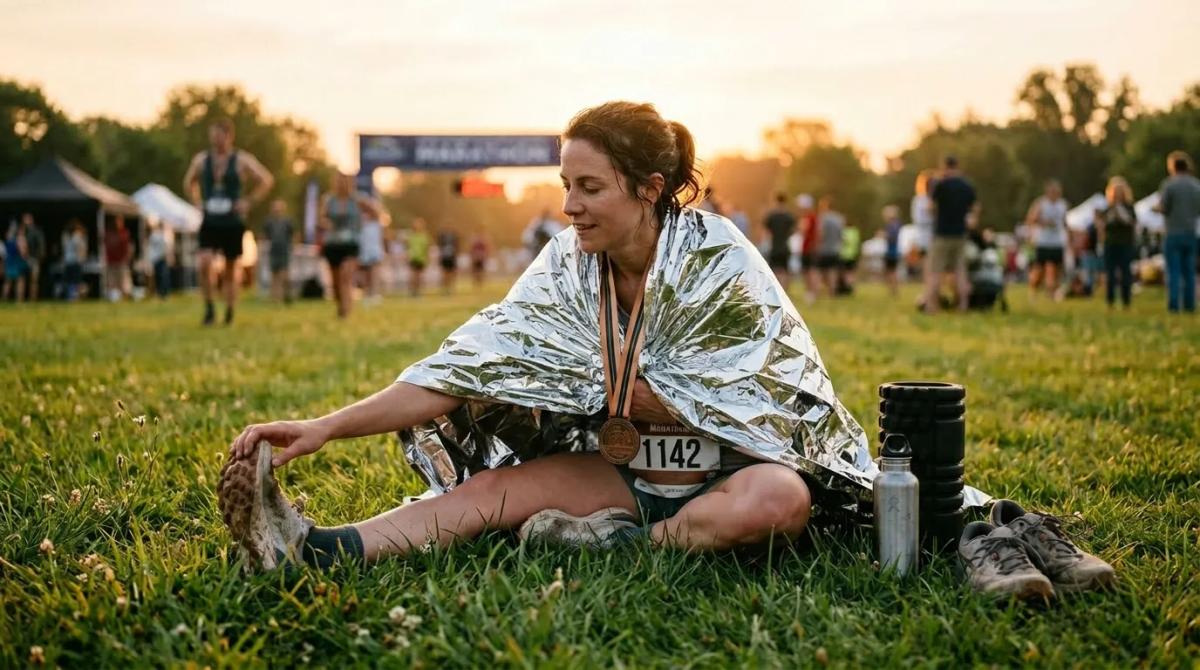
What to do after a half marathon or marathon to recover faster, reduce soreness, and get back to training. A day-by-day recovery guide for runners of all levels.
Medical disclaimer: The training information in this article is for educational purposes only and does not constitute medical advice. Consult a licensed healthcare provider or sports medicine professional before beginning any new training program, particularly if you have a pre-existing health condition, injury history, or have been inactive for an extended period.
Crossing the finish line is the highlight — but what comes after matters just as much as the race itself. Poor post-race recovery leads to prolonged soreness, increased injury risk, and a longer gap before you can train again. This guide covers exactly what to do in the days and weeks after a half marathon or marathon to bounce back faster and smarter.
Why Race Recovery Takes Longer Than You Think
Running a half marathon or marathon creates significant physiological stress: muscle fiber micro-tears, glycogen depletion, oxidative damage from sustained effort, and immune system suppression. The soreness you feel in the first 24–48 hours (delayed onset muscle soreness, or DOMS) is just the most obvious symptom. Full muscular and systemic recovery takes considerably longer than most runners expect:
- 5K: 3–5 days for most runners
- 10K: 5–7 days
- Half marathon: 10–14 days
- Marathon: 3–4 weeks minimum; some runners take 6 weeks
The classic guideline is one easy day for every mile raced — so a marathon warrants at least 26 easy days before hard training resumes.
Immediately After the Race (First 30 Minutes)
- Keep moving. Walking for 10–15 minutes after crossing the finish line helps blood return from your legs and prevents blood pooling. Sitting or lying down immediately prolongs soreness.
- Refuel quickly. Eat something with carbohydrates and protein within 30–45 minutes of finishing. A banana, chocolate milk, a recovery bar, or race-provided food all work. Your muscles are most receptive to glycogen replenishment in this window.
- Hydrate. Drink water and an electrolyte beverage to replace fluids lost during the race. Continue drinking throughout the afternoon.
- Change out of wet gear. Staying in wet, sweaty clothing invites chafing and drops your core temperature uncomfortably fast in air-conditioned environments.
Day 1 After the Race
- Rest completely or do at most a very easy 10–15 minute walk. No running.
- Ice sore spots (quads, calves, knees) for 15–20 minutes a few times during the day. Avoid anti-inflammatory medications if possible in the first 24 hours — inflammation is part of the healing process.
- Eat plenty. Your body is repairing. Now is not the time to restrict calories. Prioritize protein (for muscle repair) and complex carbohydrates (to replenish glycogen).
- Sleep. This is when the most meaningful recovery happens. Aim for 8–9 hours.
Days 2–4 After the Race
- Easy walking is fine and actually beneficial — 20–30 minutes helps flush metabolic waste from muscles.
- Light stretching of major muscle groups: quads, hamstrings, calves, hip flexors. Do not push range of motion aggressively.
- Compression socks or sleeves on your calves can reduce swelling and improve circulation. Wear them during the day if your legs are puffy.
- Avoid temptation. Many runners feel fine on Day 3 and want to run. Resist. The muscular damage that is not visible takes longer to repair than the surface soreness.
Days 5–10 After a Half Marathon / Days 5–14 After a Marathon
- Easy running can resume if you feel genuinely recovered — no soreness, no stiffness, normal energy levels.
- Keep runs short (20–30 minutes) and easy (conversational pace). This is not the time for speed work or long runs.
- Cross-training (swimming, cycling, easy yoga) is a good alternative if you want to stay active without running impact.
Weeks 2–4 After a Marathon
This is the "reverse taper" — gradually rebuilding mileage and intensity. A common schedule:
- Week 2: 3–4 easy runs, 20–30 min each. No pace work.
- Week 3: Return to normal easy volume (50–60% of pre-race mileage). One slightly longer run (6–8 miles for marathon runners).
- Week 4: Resume normal training if feeling 100%. First quality workout (light strides or a short tempo) only if truly recovered.
Most marathon runners are ready to resume full training — including long runs and speed work — 4–6 weeks after race day. Rushing this window is the most common cause of post-marathon injuries.
Post-Race Recovery in Florida Heat
Florida runners face an extra challenge: the combination of race day exertion and Florida heat and humidity means sweat losses are higher, core temperature takes longer to normalize, and electrolyte depletion is more significant than in cooler climates. Prioritize sodium and potassium replacement in the hours after a Florida race — not just plain water. Sports drinks, electrolyte tablets, salty foods, and coconut water all help restore balance.
Plan Your Next Race
Recovery is also the right time to set your next goal. Browse Florida half marathons and Florida marathons on Run Florida Run and pick your next target while your motivation is high. Our 13-week half marathon training plan and beginner marathon training plan give you a structured return to training when you're ready.
Frequently Asked Questions
How long does it take to recover from a half marathon? expand_more
Full recovery from a half marathon takes 10–14 days for most runners. You may feel fine after 3–5 days, but muscle fiber repair and systemic recovery continue beyond when soreness disappears. Avoid hard training for at least 10 days after a half marathon.
How long does it take to recover from a marathon? expand_more
Full marathon recovery takes 3–6 weeks. The classic guideline is one easy day per mile raced — so at least 26 easy days before resuming hard training. Most runners are back to full training 4–6 weeks after race day.
What should I eat after a half marathon? expand_more
In the first 30–45 minutes after finishing, eat foods with both carbohydrates and protein to begin glycogen replenishment and muscle repair. Chocolate milk, a recovery shake, a banana with peanut butter, or a full meal all work. Continue eating well above maintenance calories for 2–3 days post-race.
Should I run the day after a marathon? expand_more
No — rest completely or walk gently for the first 1–2 days after a marathon. Even if you feel okay, the muscle fiber damage from 26.2 miles is significant and running on it extends your recovery timeline. Easy walking for 20–30 minutes is fine and actually beneficial for circulation.
How do I reduce soreness after a race? expand_more
Ice sore areas (quads, calves, knees) in the first 24 hours. Walk gently instead of sitting all day. Wear compression socks. Sleep 8–9 hours. Eat plenty of protein and carbohydrates. Gentle stretching after Day 2. Epsom salt baths can provide relief. Avoid hard training until soreness fully resolves.
When can I run again after a marathon? expand_more
Easy jogging can resume 5–7 days after a marathon if you feel genuinely recovered (no soreness, normal energy). Short easy runs (20–30 min) are appropriate in Weeks 2–3. Speed work and long runs should wait until Week 4–6 at the earliest.