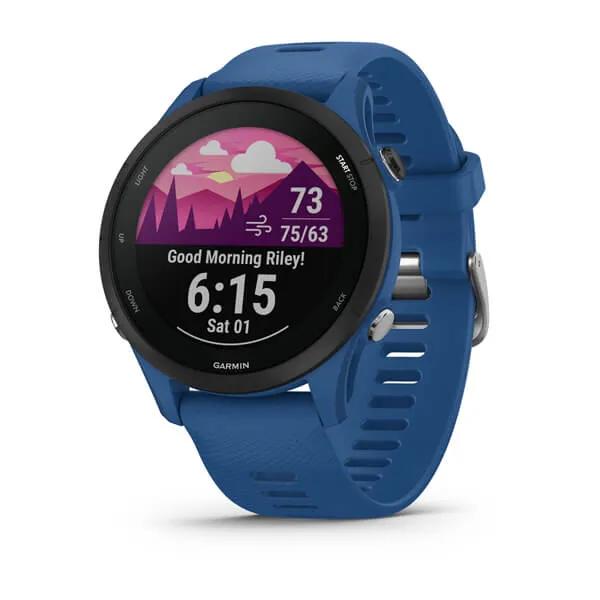
The best GPS running watches for Florida runners in 2026. We compare Garmin, COROS, Polar, and Apple Watch for heat training, race tracking, and marathon prep.
A GPS running watch is the single most useful training tool for Florida runners. It tracks your pace, distance, heart rate, and training load — critical data for training smart in Florida's challenging heat. Here are our picks for 2026, tested in Florida conditions.
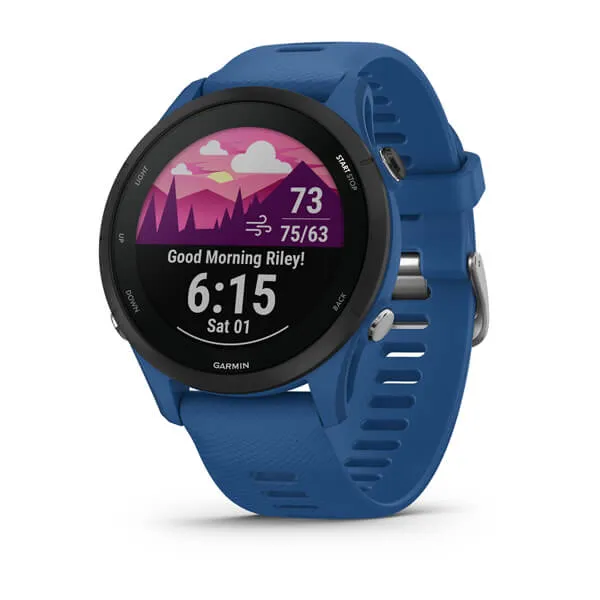
Best Overall: Garmin Forerunner 265
Price: $449 | Battery: 13 days (smartwatch) / 20 hours (GPS) | Display: AMOLED
The Forerunner 265 is the best all-around running watch for serious Florida runners. Its AMOLED display is readable in direct Florida sunlight, the GPS accuracy is excellent, and the training features include daily suggested workouts, training status, heat acclimation tracking, and race predictor. The heat acclimation feature is especially valuable — it tracks how adapted your body is to Florida's temperature.
Key features for Florida runners: Heat and altitude acclimation status, training readiness score, body battery energy monitoring, morning report with weather and training suggestions.
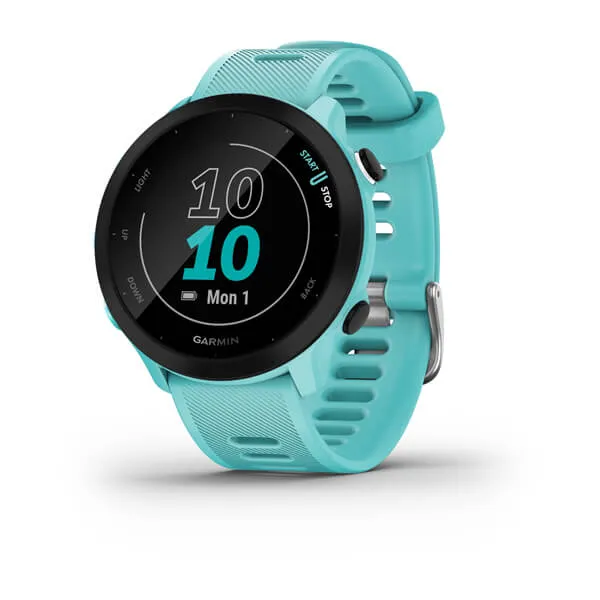
Best Budget: Garmin Forerunner 55
Price: $199 | Battery: 14 days (smartwatch) / 20 hours (GPS) | Display: MIP
The Forerunner 55 packs impressive features at $199: GPS, wrist heart rate, PacePro race pacing, training plans, and Garmin Coach. It lacks the advanced metrics of the 265 (no training readiness, no AMOLED screen) but delivers reliable GPS tracking and enough features for most runners.
Best for: Beginners and intermediate runners who want reliable GPS tracking without paying for features they won't use.
Best Value: COROS PACE 3
Price: $229 | Battery: 24 days (watch) / 38 hours (GPS) | Display: MIP
The COROS PACE 3 offers the best battery life in its price range — 38 hours of GPS is enough for multiple weeks of Florida training without charging. It tracks running power (no pod needed), has multi-band GPS for accuracy, and weighs just 39g. Training features include EvoLab analytics with fatigue, fitness, and recovery metrics.
Best for: Runners who want great battery life and advanced metrics at a mid-range price. Particularly good for ultra runners and marathon trainees who need GPS to last through long Florida training runs.
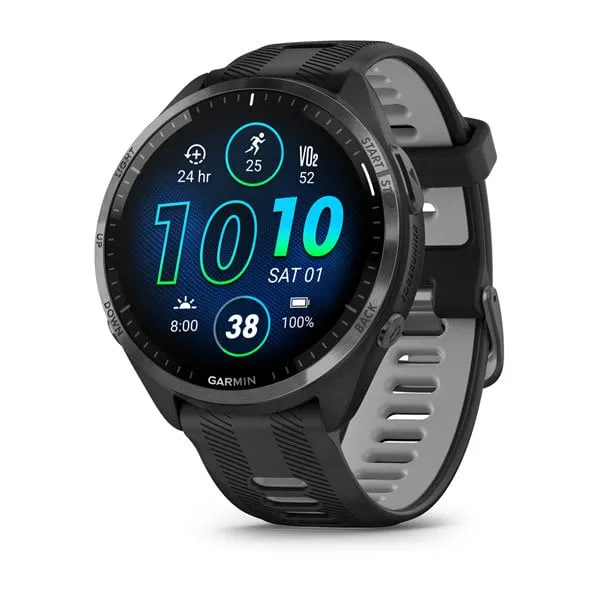
Best for Triathletes: Garmin Forerunner 965
Price: $599 | Battery: 23 days (smartwatch) / 31 hours (GPS) | Display: AMOLED touchscreen
Florida has one of the biggest triathlon communities in the country. The Forerunner 965 tracks swimming, cycling, and running with dedicated profiles for each. Its AMOLED display, maps, and music storage make it a premium training companion. Training status v2, hill score, and endurance score provide deep insights.
Best for Trail Running: COROS APEX 2
Price: $299 | Battery: 14 days (watch) / 45 hours (GPS) | Display: MIP
For Florida trail runners exploring places like Alafia River State Park, Santos trails, or the Cross Florida Greenway, the APEX 2 provides navigation with breadcrumb trails and waypoints. Its 45-hour GPS battery handles even the longest Florida trail adventures.
Comparison: Garmin Forerunner 55 vs COROS PACE 2
This is the most common comparison at the $200 price point:
- GPS accuracy: Both are solid. COROS PACE 2 has dual-frequency GPS (slightly better in dense tree cover).
- Battery: COROS wins — 30 hours GPS vs Garmin's 20 hours.
- Training features: Garmin wins with Garmin Coach, PacePro, and a larger training ecosystem.
- App ecosystem: Garmin Connect is more polished with more third-party integrations (Strava, TrainingPeaks).
- Weight: COROS PACE 2 is lighter at 35g vs Garmin's 46g.
Our pick: The Garmin Forerunner 55 for beginners who want the Garmin ecosystem. The COROS PACE 2/3 for value-focused runners who prioritize battery life and advanced metrics.
Running Watch Features That Matter in Florida
- Heat acclimation tracking — Available on Garmin 265+ models. Shows how adapted you are to heat, critical for Florida summer training.
- Sunlight-readable display — Florida's intense sun makes screen readability important. MIP displays (Garmin FR55, COROS) are always readable. AMOLED displays (Garmin 265/965) are bright but drain battery faster in always-on mode.
- Water resistance — All watches listed are rated for swimming. Important for Florida's sudden rain showers and post-run ocean dips.
- Battery life — Long GPS battery matters for Florida marathon training runs of 2-4 hours. COROS leads here.
Find Your Next Race
Now that you've got the data, put it to use. Find upcoming races across Florida to test your training.
Frequently Asked Questions
What is the best running watch in 2026? expand_more
The Garmin Forerunner 265 is the best overall running watch for most runners in 2026. It offers AMOLED display, advanced training metrics, heat acclimation tracking, and 20 hours of GPS battery. The COROS PACE 3 is the best value alternative at $229 with 38 hours of GPS battery.
Is the Garmin Forerunner 55 still worth buying? expand_more
Yes, the Forerunner 55 remains an excellent choice for beginners and intermediate runners at $199. It provides reliable GPS, heart rate tracking, Garmin Coach training plans, and PacePro pacing. It lacks advanced features like AMOLED display and training readiness, but covers the essentials well.
Garmin Forerunner 55 vs COROS PACE 2: which is better? expand_more
The COROS PACE 2 wins on battery life (30 vs 20 hours GPS) and weight (35g vs 46g). The Garmin Forerunner 55 wins on training ecosystem (Garmin Coach, better app integration) and ease of use. Choose COROS for battery and value, Garmin for the broader ecosystem.
Do I need a running watch for a 5K? expand_more
A running watch isn't necessary for a 5K, but it enhances the experience with real-time pace tracking, heart rate data, and accurate distance. For training, it helps you run the right paces. Your phone can track basics, but a watch is more convenient and accurate.
What is heat acclimation on Garmin watches? expand_more
Heat acclimation is a Garmin feature (Forerunner 265+) that tracks how adapted your body is to running in hot conditions. It uses temperature data and your physiological responses to show a percentage of heat adaptation. Extremely useful for Florida runners training through summer.